Disruptive Discovery Seed Program
Supported by Emory’s Office of the Provost, this internal seed program seeks to accelerate forward-thinking high-risk, high-reward projects that will successfully demonstrate feasibility and produce persistently disruptive scholarly products. The following teams were selected as awardees for their potential to be transformative and establish Emory scholars as thought leaders in their fields. Awardees received one year of funding and up to $100,000 of seed support for their work. The next submission process for seed funding will open in the spring 2027.
Please congratulate all of our winners from 2026!
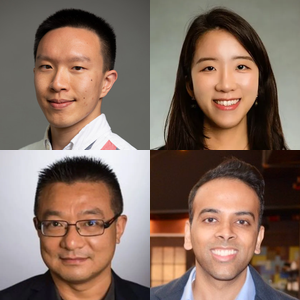
Rethinking the Patient Timeline with ACT-RL: A Decision-Centric Framework for Actionable Reinforcement Learning in Healthcare
This diverse project team is lead by Shengpu Tang, Assistant Professor, ECAS, Department of Computer Science, and supported by a diverse group of scholars including Siva Bhavani, SOM, and Xiao Hu and Hyunjung Gloria Kwak, NHWSN. As artificial intelligence becomes increasingly integrated into healthcare, ensuring that AI-generated recommendations align with real clinical workflows is critical. This project will develop a new framework called Actionable Clinical Timeline for Reinforcement Learning (ACT-RL) that better aligns AI models with the continuous nature of patient care. By addressing a common flaw in existing healthcare AI systems, the project seeks to produce more reliable treatment recommendations and establish new standards for trustworthy medical AI.

Structure-Resolved Metabolomics: A New Paradigm for Definitive Metabolite Discovery
Cassandra Quave, Professor, SOM, Department of Dermatology together with William Crandall (Postdoctoral Fellow) an analytical chemist and pharmacologist will work toward understanding how drugs are transformed in the body is essential for developing safer and more effective therapies. This project will create a new platform for directly visualizing and identifying drug metabolites at atomic resolution, overcoming limitations of current technologies. The research lays the foundation for structure-resolved metabolomics, a new approach that could transform drug development, toxicology, and precision medicine.

Redefining Pain in Sickle Cell Disease: A Decentralized Platform Integrating Animated Pain Phenotyping and Wearable Physiology to Replace the Numeric Pain Scale
This project team includes Charles Jonassaint, PhD, acting associate professor, SOM, Hematology and Medical Oncology, along with a diverse team including Fuad El Rassi, MD, Associate Professor and Chief of Hematology-Oncology, Emory/Grady Memorial Hospital; Stacey Fedewa, PhD, Department of Hematology and Medical Oncology; Vinita Singh, MD, Division Chief of Pain Medicine and Director of Cancer Pain; and community partner Sickle Cell Foundation of Georgia. Pain is the most common and debilitating symptom of sickle cell disease, yet the tools used to measure pain in clinical research have changed little in decades. This seed-funded project will establish and validate RhythmSCD, a digital health platform that integrates wearable sensors, patient-reported outcomes, and novel pain visualization technology to better track pain over time. By improving the accuracy of pain measurement, the research could strengthen future clinical trials and support the development of more effective therapies for people with sickle cell disease.